
Choose a specific uncertainty
Perhaps visitors do not understand the value of your service, lack trust, or find the next step too demanding. Each explanation suggests a different test. Gather evidence from conversations, observation and available data first. Then state the audience, proposed change and expected effect. This clarifies what the test is intended to answer and what it cannot establish.
Apply conversion psychology practically
People need orientation, credible evidence and a clear way to act. Check whether the headline matches the expectation created by the previous page, whether important objections are answered and whether the CTA names the next step. Exaggerated urgency or unsupported promises can damage trust. Psychology helps formulate hypotheses; it does not replace observing your actual audience.
Define the success criterion and safeguards
Before starting, define one primary metric and relevant safeguards. If the objective is more form completions, enquiry quality still matters. Document which visitors are included, which events count and how repeated actions are handled. Test both variants functionally. A broken form does not produce a useful comparison of design choices.
Not every website needs an A/B test immediately
With little relevant traffic, a test may take a long time or produce uncertain conclusions. Plan the required volume around the baseline rate, meaningful effect and chosen evaluation method. If those conditions are missing, task observation, interviews or a UX audit may be more useful first. A simple before-and-after comparison remains vulnerable to other influences such as campaign changes or seasonality.
Close the experiment and learn from it
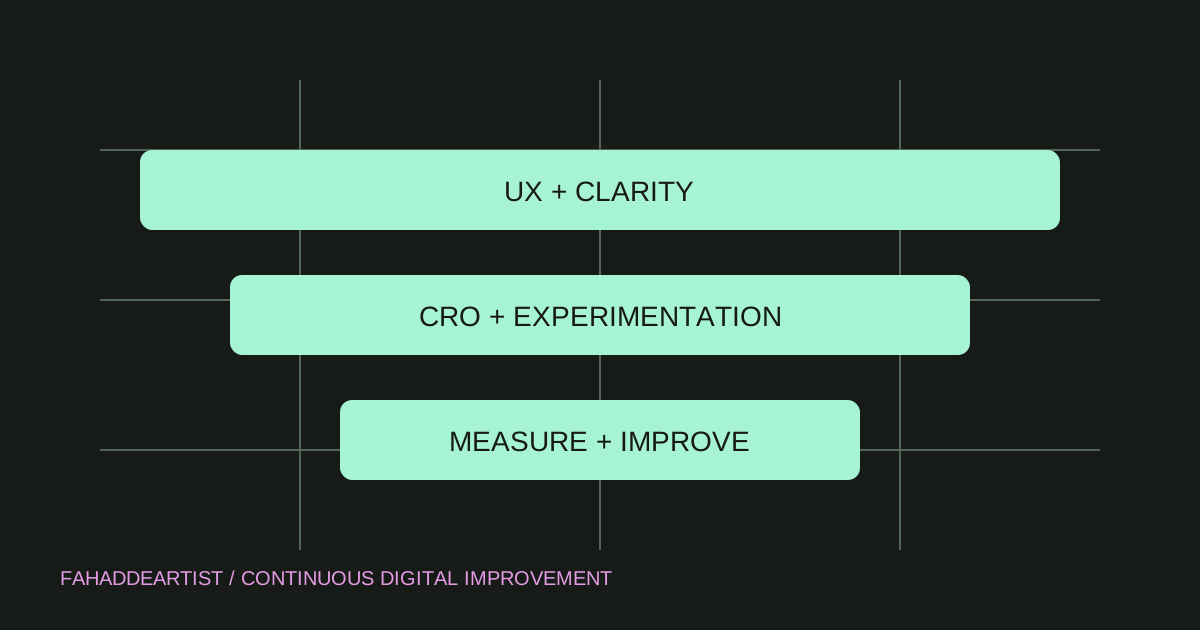
Follow the evaluation rules agreed beforehand rather than stopping at the first positive intermediate result. Document inconclusive findings too. After implementation, check functionality again and review whether the expected effect holds in practice. A record of hypotheses, variants, results and limitations makes learning reusable. This turns isolated design changes into a continuous optimization process.