
One offer for a recognizable audience
Explain who the offer is for, what problem it solves and what visitors can do next. Align the message with the ad, search intent or linking page. A page serving very different audiences needs clear orientation. Ask real people to explain the offer and next step in their own words to reveal misunderstandings.
Connect trust to the decision
Place relevant projects, specific deliverables and answers to common objections where they help a decision. Use genuine references and verifiable claims only. Explain the purpose and format of an introductory conversation. Visitors should understand whether they are buying immediately, choosing an appointment or sending an initial enquiry.
Question the purpose of each form field
For each field, ask whether the information is needed for the next step. Some questions can wait for a conversation; others are essential for routing or qualification. Shorter is not automatically better. Label fields clearly, distinguish required information and explain errors beside the relevant field. Check the complete journey using a keyboard and a small screen.
Include the handover
After submission, show an unambiguous confirmation. Explain what happens next without promising a response time the team cannot reliably meet. Internally, check who receives the enquiry and which details are needed to act. A connected CRM or suitable automation can replace manual copying. Exception handling and human review belong in the implementation.
Evaluate the complete funnel
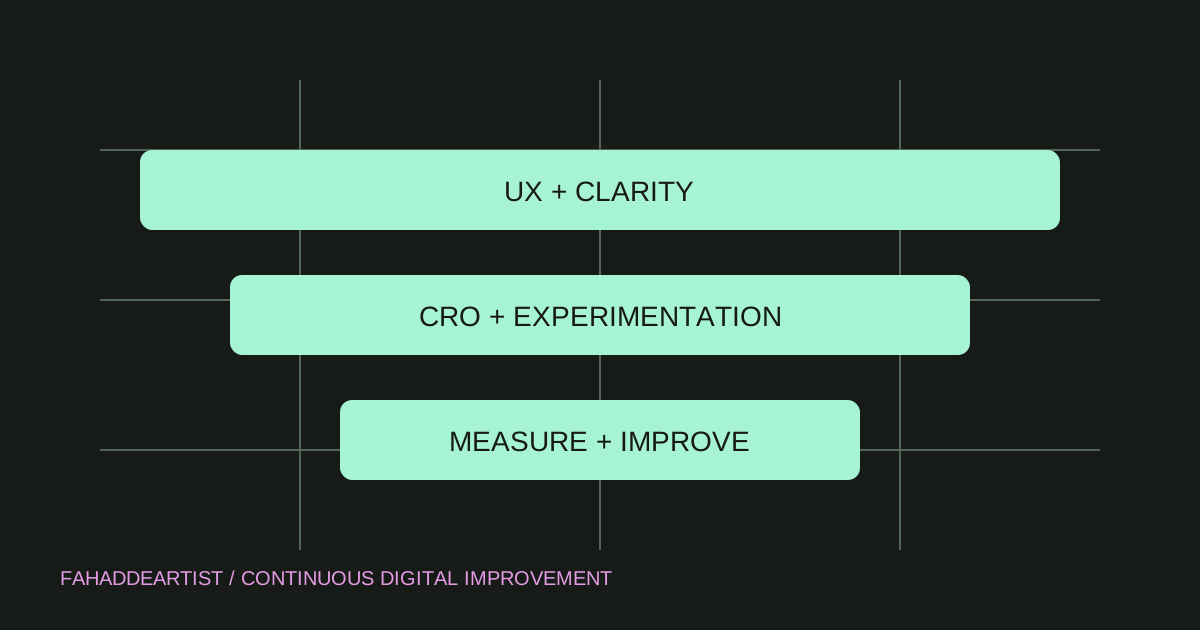
Treat visits, CTA engagement, form starts, completions and qualified leads as a connected process. Keep definitions and data sources consistent across the comparison period. Discuss with sales whether enquiries match the offer. Use the findings to prioritize the next change. UX, CRO and automation then work together toward commercial impact.